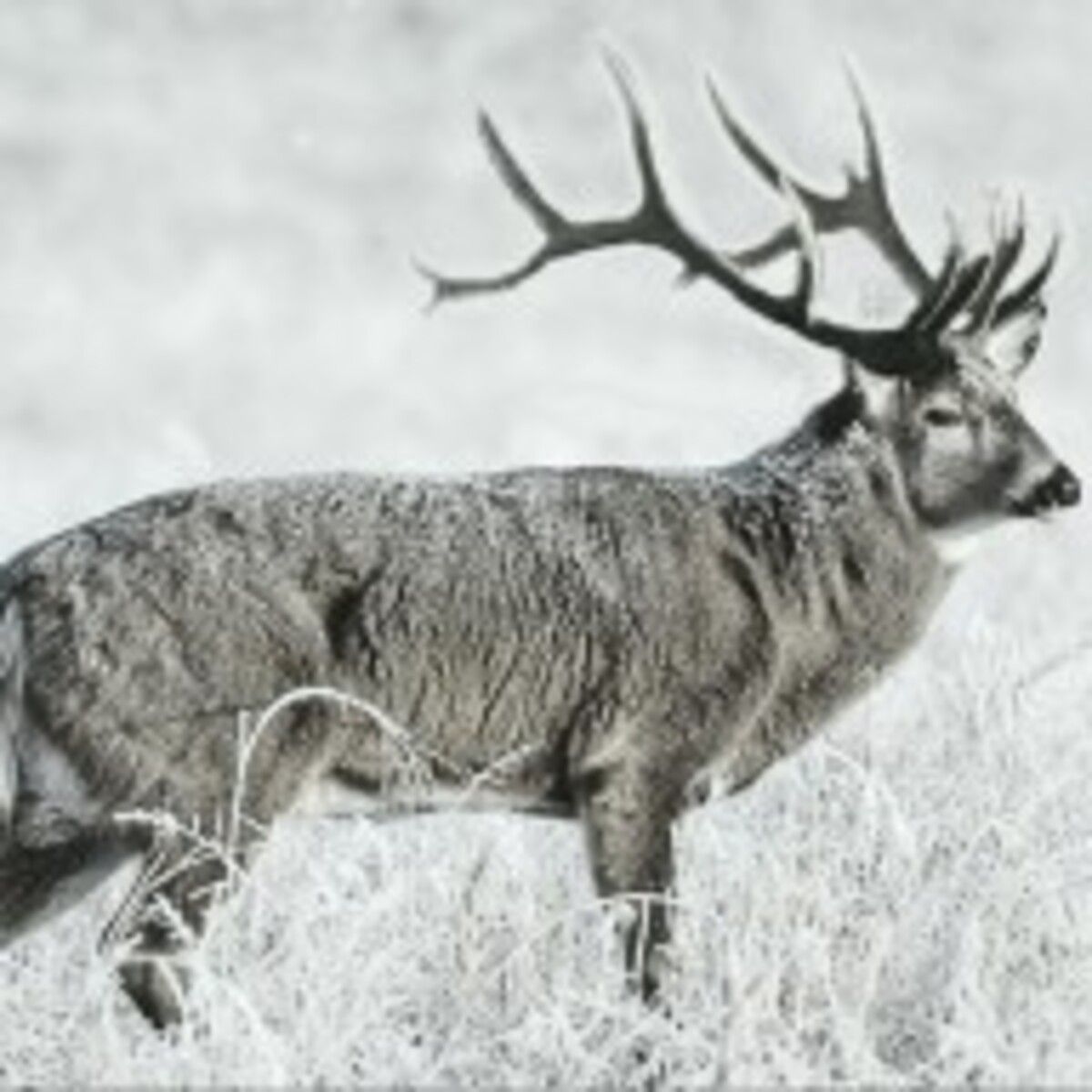

Each and every year, American drivers file more than one million insurance claims related to animal collisions and deer account for the vast majority of them. According to the Insurance Institute for Highway Safety, the human toll related to these collisions clocks in at around 200 deaths per year, tens of thousands of injuries and billions in damages. As deer populations continue to swell in certain areas of the country, hitting one is now less of a freak accident and more of a seasonal hazard.
As we all do our best each fall to keep numbers in check, the fact remains that deer collisions continue to rise. As some areas offer additional tags and organize strategic culls, a study published this week in Current Biology offers an unexpected piece of the solution: mountain lions.
Researchers led by Justin Suraci of Conservation Science Partners examined the Olympic Peninsula in Washington, a region that still supports a long-established cougar population. It was there they set up more than 500 camera traps, utilized GPS data from nearly 60 collared cougars, and paired it with five years of vehicle-collision records in an attempt to gain a better understanding of the influence cougars had on local deer populations. The team soon learned that areas with high puma occupancy saw a 67% reduction in the probability of a deer-vehicle collision and a 76% drop in the expected number of collisions compared with areas where cougars were scarce.

Map of the study area and WVC rates on the Olympic Peninsula, Washington, USA
The evidence soon pointed to the fact that the effect was not primarily about cougars killing enough deer to thin the herd but rather a behavioural shift by deer when cougars were present. Given that cougars are ambush hunters that favor habitat edges like places where forest meets roadways or low-density developments, the research showed that deer respond by avoiding those very types of places.
“Those habitat edges are the best hunting habitat for pumas. They can hide in the forest and attack a deer foraging along the roadside,” Suraci said. “So what we think is happening is that deer are moving away from these more fragmented, edgy areas with higher road density where the pumas are present.”
Research showed that in the presence of cougars, deer were 15% less likely to use high-road-density areas and 86% more likely to stay in remote timber. Deer in cougar-inhabited areas were also found to have shifted toward more daytime activity, reducing the dangerous overlap with nighttime traffic when many of the worst crashes occur.
In short, the cats create what some are calling a “landscape of fear” that pushes deer away from the places where cars are most likely to hit them.
This is not the first time researchers have linked large carnivores to safer roads either. In a 2016 study in Conservation Letters, researchers modeled what cougar recolonization might mean for the eastern United States and found that their projections suggested a long-term 22% reduction in deer-vehicle collisions if cats returned at meaningful densities. Perhaps more importantly, they also looked at a real-world natural experiment that included the re-establishment of cougars in South Dakota during the 1990s. In counties where big cats became established, collisions tumbled by roughly 9% within eight years relative to counties without them, resulting in about 158 fewer crashes and $1.1 million in avoided costs each year.
Outside of large cats, parallel work on wolves has shown similar patterns. In Wisconsin, the return of wolves to certain counties has since reduced deer-vehicle collisions by about 24%, though the mechanism is not identical as wolves hunt differently and can suppress deer numbers more strongly in some landscapes.
And while all of this research is interesting, it still does not seem to tell the whole story. Western states with established cougar populations (like Montana and Wyoming) still appear high on many state-by-state ranking lists of animal collisions. Looking to the east, many of those states that are without cougars also hold dominant positions on those very same lists. The unfortunate reality is that the confounding variables are simply too large. When taking deer densities, traffic volume, road design, hunting pressure and habitat fragmentation into consideration, it becomes difficult for crude regional averages to isolate the predator effect cleanly.
Still, the Olympic Peninsula results are strongest when comparing high- versus low-cougar areas within the same landscape and that resulting pattern is consistent enough to matter. If nothing else, this study and the ones that came before it should serve as a reminder that balanced ecosystems remain the most effective way to manage our natural resources.
