

In what has become another example of bending a knee to a noisy cohort of the population, Utah has repealed a “strict” license-only requirement the state floated last year governing access to certain Wildlife Management Areas (WMAs). That original piece of legislation (H.B. 309) was thrust into the spotlight after a Utah trail runner was stopped by wildlife officials who informed him that he was legally required to have a valid hunting or fishing license to recreate on the state land he was using.
Annoyed at the fact that he’d actually have to pony up a few bucks to keep the very ground he was running on in working order, he did what any modern day revolutionary would do; he created an Instagram reel complaining about the new law.
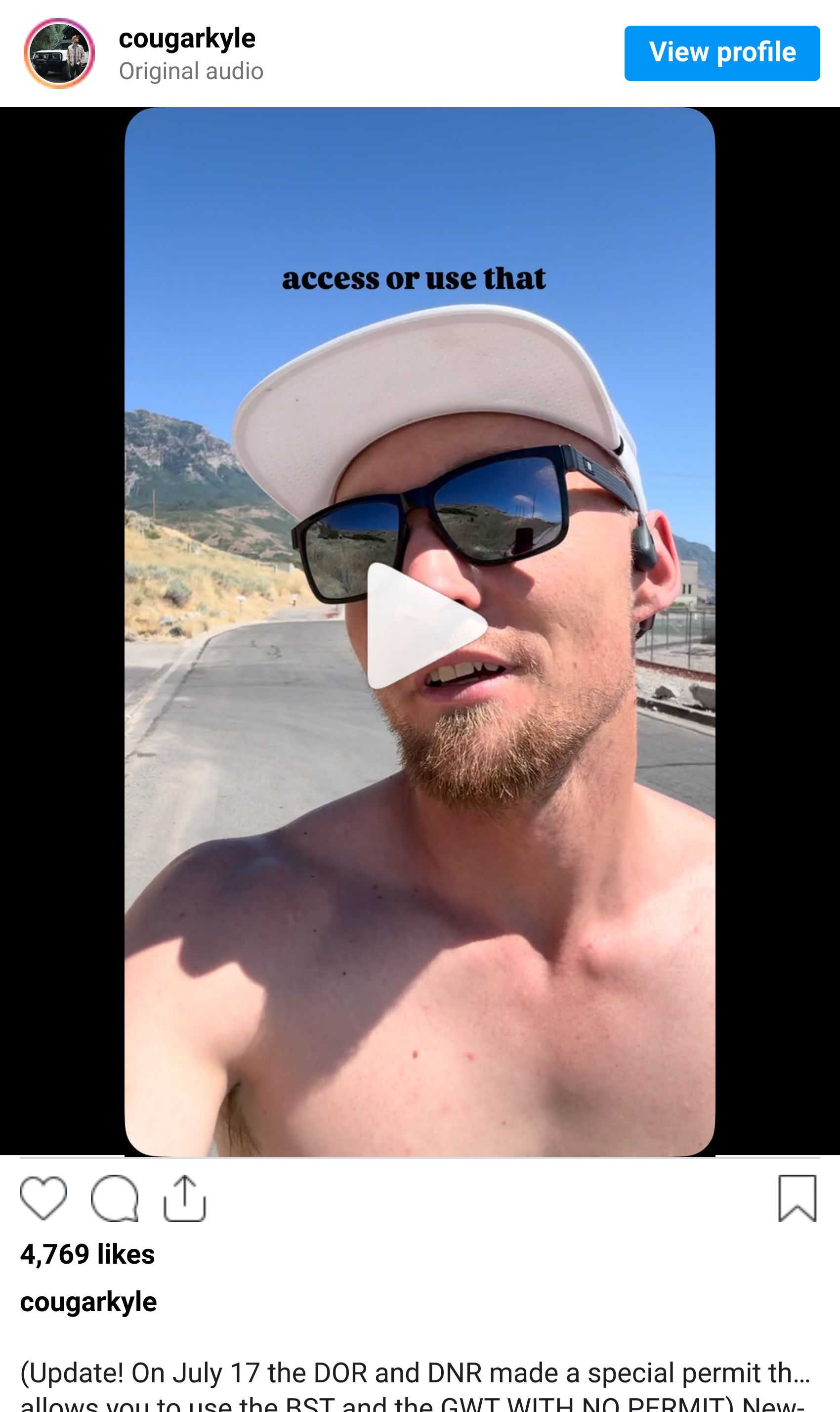
And in a culture that, in many cases, rewards the squeakiest wheel, Utah Governor Spencer Cox did just that by kowtowing to the growing mass of non-paying non-consumptive users. Yes, despite the original rule being a straightforward way to ensure everyone using the resource helped fund it, the newly-introduced H.B. 30 (Wildlife Management Area Amendments) was signed into law last week, giving everyone but hunters and anglers a free pass on certain state lands.
The new law repeals the strict “license-only” requirement from H.B. 309 and replaces it with a more flexible system. Starting July 1st, adults 18 and older can access covered WMAs with either a valid Utah hunting/fishing/combination license or a free digital access permit obtained by watching a short online educational video about WMAs and agreeing to the rules.
The consolation to all of this seems to be hidden in the newly-created Wildlife Management Area Stewardship Fund which accepts voluntary donations from users to support habitat improvements, maintenance, and future WMA acquisitions.
Which is to say that if you happen to feel bad about not having to pay, you can expunge your guilt by dropping a few bucks in the donation bucket on your way out.
On one hand, I get it. This can be seen as a win for broader public access and education. The video requirement ensures visitors at least learn why these areas exist, what wildlife they support, and how to minimize their impact.
On the other hand, plenty of conservation voices are arguing for a small mandatory contribution instead of a completely free option, saying it would better share the stewardship load and generate more revenue for the new fund.
Voluntary donations are great, but history shows they often fall short when the barrier to entry drops to zero. I for one, won’t be fooled into thinking that this is anything more than a legislative compromise designed to quiet the loudest critics while preserving core funding mechanisms (that’s us).
The bottom line hasn’t changed since we wrote about H.B. 309: WMAs were never general public parks. They were purchased and are managed with dollars from hunters, anglers, and the federal aid programs those dollars unlock.
And if we’re all so aligned on protecting these WMAs, then in the wise words of our buddy Bernie, we should once again be asking everyone for their financial support.

